
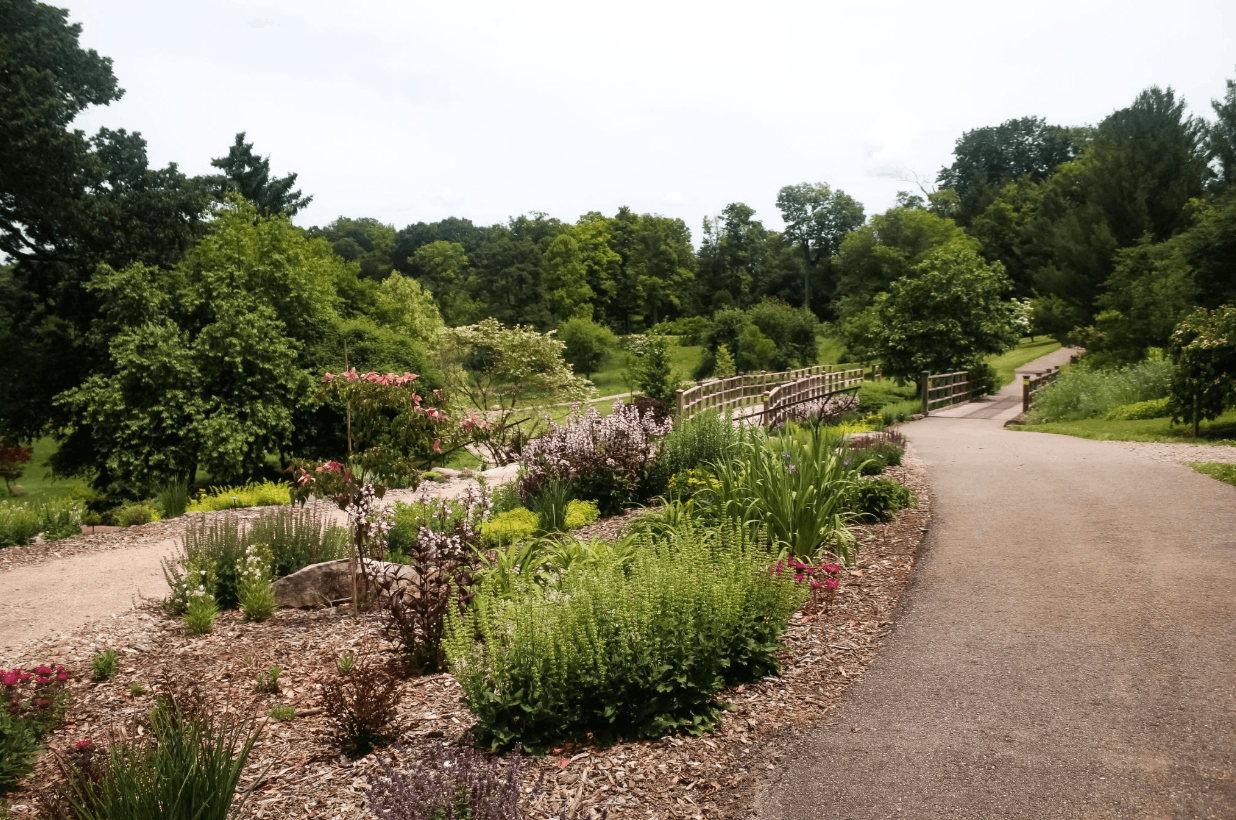
At the Dawes Arboretum, conservation is not treated as an abstract idea or a distant responsibility. It’s something visitors are encouraged to understand, practice, and take home with them.
Set across nearly 2,000 acres in Newark, Ohio, the Dawes Arboretum operates as both a public green space and an educational resource. It is designed with a clear purpose: to help people build the skills and confidence needed to take care of trees and natural systems in their own environments.
That focus reflects a broader shift in how conservation is approached today. Instead of relying solely on large-scale efforts, there is growing emphasis on individual action and what homeowners, families, and communities can do in their own spaces. At Dawes, that idea is built into the experience from the beginning.
Learning by doing, not just observing
A visit to the Dawes Arboretum often begins with exploring its walking trails, observing tree collections, or attending a seasonal program. But the experience is designed to move beyond observation.
Workshops, guided sessions, and demonstrations are structured to show visitors how to apply what they are learning in their own homes. Everything is focused on the practical, from how to plant correctly and support tree health to how to make informed decisions about landscape management.
The goal is to present information that is usable. Visitors are encouraged to ask questions, engage with staff, and connect what they see on site to what they can do at home.
From arboretum to backyard
One of the defining strengths of the Dawes Arboretum is how clearly it connects large-scale conservation work to individual responsibility.
Programs and demonstrations focus on everyday decisions, from what to plant to where to plant and how to care for it over time. Visitors are introduced to foundational practices such as assessing soil conditions, selecting appropriate species, and planning for long-term growth. These techniques are practical skills that any visitor can immediately apply in their own homes.
By the time visitors leave, the takeaway is straightforward: meaningful environmental impact often starts with small, consistent actions taken by an individual.
Conservation as a shared responsibility
The Arboretum’s nonprofit mission is to enrich lives through the conservation of trees, nature, and history, which invites others to participate through a variety of ways, including volunteering. Monthly opportunities allow participants to assist with planting, habitat restoration, and other hands-on projects. These experiences provide a clearer understanding of how conservation works at scale, while reinforcing the role individuals can play in supporting it.
The shift from visitor to participant is intentional. It positions conservation as a shared responsibility rather than a distant goal. It also reinforces a practical reality: long-term environmental outcomes are shaped by consistent, collective effort, not isolated initiatives.
Building early understanding through experience
For younger audiences, Dawes focuses on building familiarity with the natural world through direct interaction.
Youth and family programs prioritize exploration and observation, helping participants understand how trees function within larger ecosystems. Instead of relying on memorization, these experiences are designed to build awareness of how soil, water, and plant life interact, and how those systems are affected by human behavior.
This early exposure is critical. When children understand how natural systems work in a tangible way, they are more likely to carry that awareness into adulthood.
Rooted in purpose, focused on application
Since its founding in 1929, the Arboretum has maintained a clear purpose: to encourage the planting and care of trees while providing education for the public. That mission continues to shape how the organization approaches its work today. Research, education, and community engagement are not treated as separate efforts. They are integrated to support a single outcome: helping people take informed, practical action.
The result is an experience that prioritizes clarity over complexity. Visitors are not expected to leave as experts but rather with a better understanding of what they can do and how to do it.
What visitors take home
The most consistent takeaway from the Dawes Arboretum is not a single lesson or technique, but a clearer sense of responsibility. Conservation becomes less about large-scale initiatives and more about everyday decisions like what is planted, how it’s maintained, and how spaces are cared for over time.
Planting a tree, improving soil health, and choosing native species are all manageable actions. When applied consistently, they contribute to broader environmental outcomes.
That is the model the Dawes Arboretum reinforces: practical knowledge, applied at the individual level, with collective impact over time.