
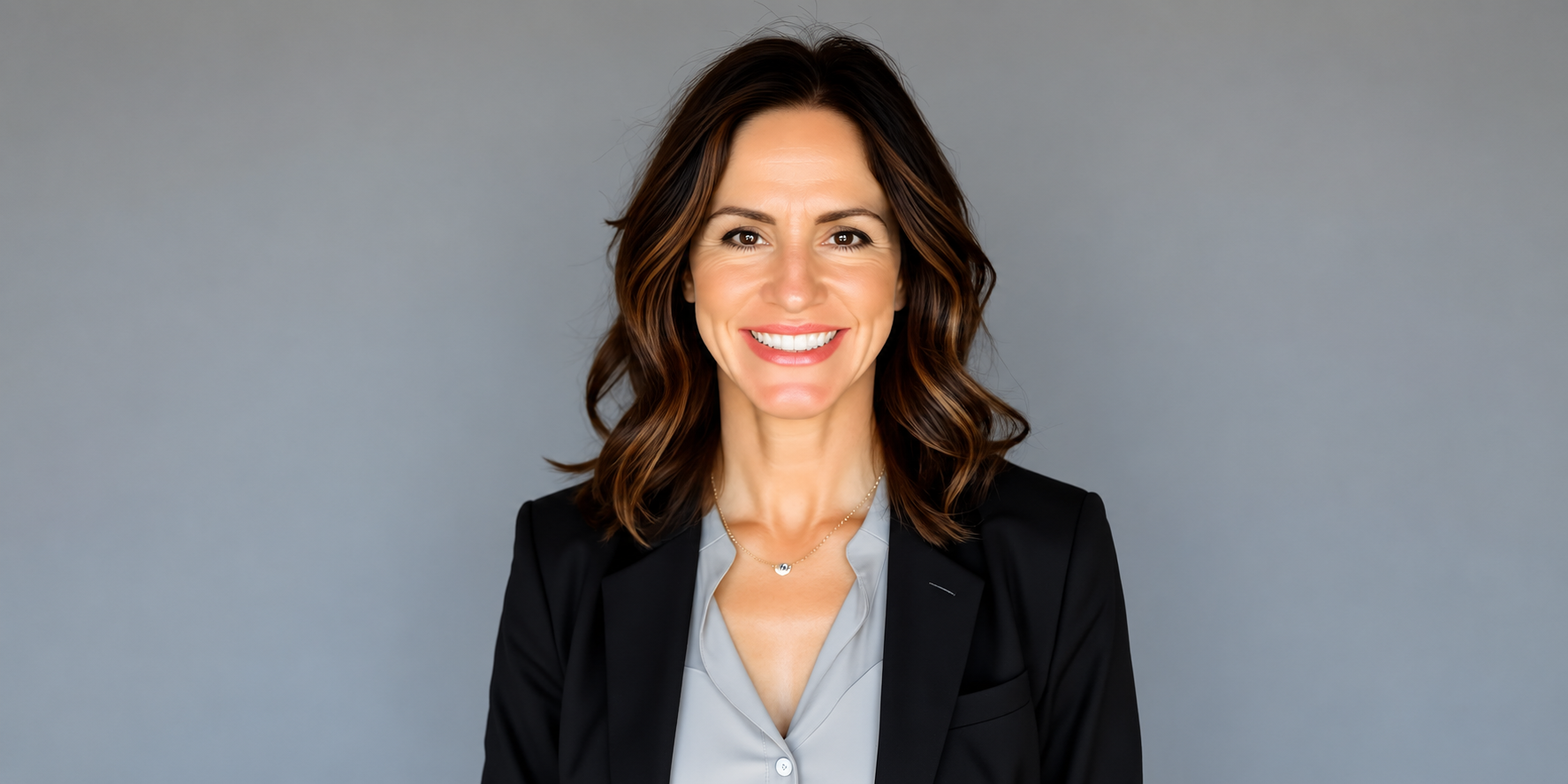
A Conversation with DeAnne Aussem, Founder & CEO of ThriveWell Partners
Introduction
What if the culture problem in your workplace isn’t a strategy problem — it’s a leadership behavior problem?
DeAnne Aussem is the Founder and CEO of ThriveWell Partners, and a leadership and human performance expert with more than 25 years of global experience. She is a Professional Certified Coach with over 4,000 coaching hours, a National Board-Certified Health and Wellness Coach, and a Certified Master Facilitator. Her certifications span Positive Psychology, Psychological Safety, Mindfulness, and Lifestyle Medicine, among others. In this conversation, she challenges us to stop treating human performance as a perk and start recognizing it as the foundation of every business result that matters. She reflects on trust, burnout, and what it really means to lead people well. DeAnne’s perspective is distinct because she has lived these principles through her own story of reinvention — and brings that grounded, real-world lens to every leader she works with. Whether you manage a team of two or lead an organization of thousands, there is something here for you.
Q1. Your journey from leading inside a global organization like PwC to founding ThriveWell Partners reflects a significant shift. What internal realizations pushed you to redefine your role as a culture-first leadership architect?
DeAnne Aussem: Honestly, the shift wasn’t dramatic; it was cumulative. After a decade leading people, culture, and wellbeing strategies for tens of thousands of employees at PwC, I had a front-row seat to what actually drives sustainable performance in one of the world’s most demanding professional environments. PwC gave me something rare: the scale to test ideas across cultures, geographies, and generations of talent, and the trust to lead work that genuinely mattered to people’s lives.
What I kept learning, over and over, was that the most powerful transformations didn’t happen through programs. They happened through people, specifically, through leaders who understood that culture isn’t the poster on the wall. It’s the meeting you called at 8 pm. It’s who gets credit and who gets passed over. It’s whether someone on your team feels safe enough to tell you an uncomfortable truth.
By the time I founded ThriveWell Partners, I had this deep conviction that the most leveraged thing I could do was work directly with leaders, helping them become the culture they say they want to build and building the kind of teams where that culture actually takes root. Because real transformation is always personal before it’s organizational. And I’d seen enough to know exactly what it takes to make it stick.
Q2. You’ve emphasized that well-being is not a benefit but a leadership capability. What mindset shifts are most difficult for senior executives to make when moving from performance-driven to human-centered leadership?
DeAnne Aussem: The hardest shift is learning to see people as the performance strategy, not as a variable to be managed around.
Most of the executives I work with became successful by optimizing outputs. They’re brilliant, driven, and wired to solve. But human-centered leadership requires a fundamentally different operating system, one built on curiosity instead of certainty, on psychological safety instead of positional authority. That’s uncomfortable for people who have been rewarded their whole careers for having the answers.
The second shift that trips leaders up is around vulnerability. There’s a pervasive cultural myth that being transparent about struggle signals weakness. I’ve had the privilege of sitting down with Brené Brown, the defining voice on this subject, and what she illuminated for me only deepened what I’d witnessed across thousands of coaching hours: when a leader demonstrates genuine self-awareness, it activates trust in everyone watching. The courage to be seen isn’t soft. It’s one of the highest-leverage leadership behaviors available.
And here’s what I’ve witnessed firsthand: the leaders who make this shift don’t just become more effective; they become more magnetic. Their teams go from functional to genuinely energized. People bring more of themselves to work, take more creative risks, and stay longer. Your well-being isn’t separate from your leadership effectiveness. It is your leadership effectiveness. That’s not a wellness message. That’s a competitive strategy.
Q3. Many organizations treat culture as something to measure after the fact rather than design intentionally. How do you guide leadership teams to operationalize culture as a strategic business function?
DeAnne Aussem: I start by asking one question: “Who owns culture in this organization?” Most rooms go quiet. That moment of silence is actually really useful. It reveals exactly where the work needs to begin.
Culture isn’t a program to be launched. It’s a shared commitment that every leader on the team is accountable for expressing daily, in small, specific, visible ways. My work is about making the invisible visible and the abstract actionable, and doing that together as a leadership community.
Practically, that means we translate values into behaviors. Not “we value integrity,” but “here is what integrity looks like in a difficult client conversation, in a performance review, in the way we run our Monday team meeting.” Culture lives in micro-moments, and those micro-moments compound into either trust or toxicity over time.
I also help teams build what I call a “culture operating cadence”: shared rituals that reinforce the environment they collectively want to create, whether that’s how they open meetings, how they recognize each other, or how they handle failure as a team. The magic happens when a leadership team stops treating culture as one person’s job and starts experiencing it as their shared identity. That’s when everything shifts.
The organizations that get this right see measurable impact: retention stabilizes, discretionary effort rises, and innovation follows naturally from psychological safety. These aren’t soft outcomes; they’re leading indicators of next quarter’s performance. That’s the business case I bring to the C-suite.
Q4. Can you walk us through an engagement where shifting leadership behavior directly influenced measurable business outcomes?
DeAnne Aussem: I’ll share one that illustrates something I believe deeply: sustainable performance is always a team accomplishment, even when it starts with one leader.
I worked with a senior executive who was technically exceptional. The kind of talent every organization wants to keep. But she had unknowingly created a dynamic on her team where people were performing for her rather than with her. The distinction matters enormously. When people perform for you out of obligation or fear, you get compliance. When they perform with you because they feel genuinely seen, challenged, and trusted, you get commitment, and commitment is where breakthrough results live.
Our coaching work focused on helping her shift from directing to co-creating. She learned to ask different questions, to create space for her team’s ideas to land, and to celebrate collective wins as loudly as she’d always celebrated individual ones. Within eight months, her team’s dynamic had transformed. Turnover dropped, and client relationships that had been strained stabilized. And perhaps most meaningfully, her team started bringing her problems earlier, which meant they were solving them faster.
She told me it was the first time in her career she actually loved leading people, not just managed them. That’s the transformation I live for, not just the business outcome, though those matter enormously, but the human one. A leader who discovers they can be both high-performing and deeply connected to the people they lead. Those leaders change organizations from the inside out.
Q5. As AI, hybrid work, and burnout continue to reshape the workplace, what does the next generation of leadership look like, and what must today’s leaders unlearn?
DeAnne Aussem: The next generation of leadership will be defined by one word: integration. Not balance. I actually resist that word, because balance implies a static equilibrium that doesn’t exist in a dynamic world. Integration means weaving your values, your wellbeing, your relationships, and your work into a life that is coherent and sustainable. Leaders who master integration will be the ones who endure, and the ones others will choose to follow.
As AI takes over more of the cognitive tasks that once defined executive value (analysis, synthesis, pattern recognition), distinctly human capabilities become more precious, not less. Empathy. Ethical judgment. The ability to navigate ambiguity together. The skill of building a team that can hold complexity and still move forward. I think about my conversation with Olympian Simone Biles, someone who modeled, at the highest possible stakes, that protecting your mental and physical reserves isn’t weakness; it’s what allows you to show up and perform when it counts most. That lesson translates directly to the boardroom.
What leaders need to unlearn is the myth that the best leaders are those who need the least, ask the least, rest the least, and show the least vulnerability. That playbook is not just outdated; it’s actively counterproductive when the workforce is watching leaders more closely than ever and when the research is unambiguous: people follow energy, not authority.
My H.O.P.E. Blueprint™, built around Harmony, Optimism, Perseverance, and Empathy, was designed for exactly this moment. It gives leaders a framework for thriving by design rather than surviving by default. And at its core, it’s a framework for building teams that thrive, because no leader succeeds alone, and the ones who understand that earliest will lead the organizations that shape what comes next.
Conclusion
DeAnne Aussem makes one thing clear: culture is not built in boardrooms or strategy decks. It is built in everyday moments — in whether you listen, how you respond under pressure, and how consistently you show up for the people around you. She reminds us that human performance and business performance are not separate conversations. They never were. The leaders who invest in trust, lead with empathy, and take ownership of the culture they create are the ones building organizations built to last. Her message is both simple and powerful: leadership grows through self-awareness, and culture grows through consistent behavior. So here’s the question worth sitting with today — How are you showing up? Because in the end, that’s what culture is made of.