
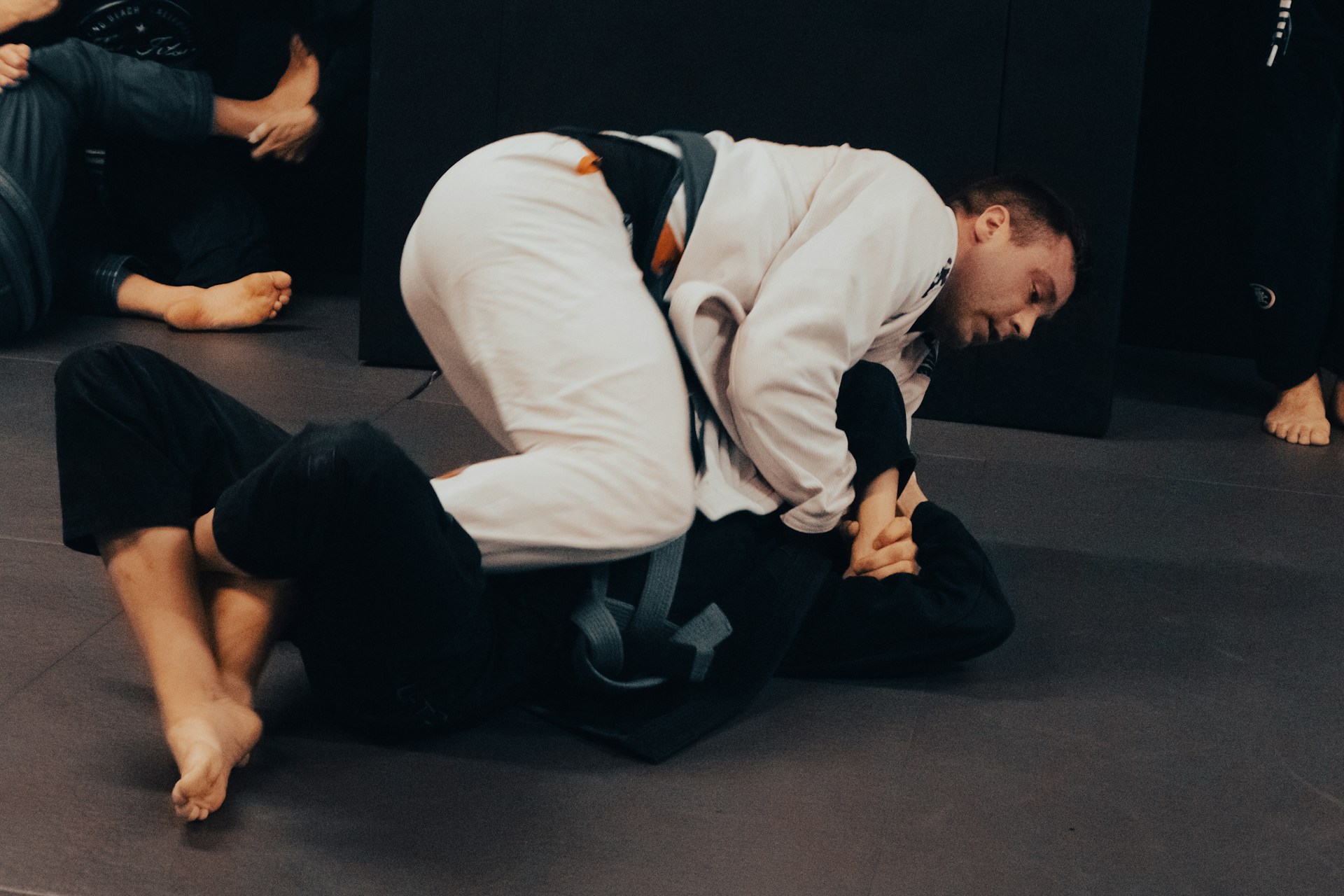
It’s easy to assume a combat sport mostly teaches physical lessons, but anyone who’s spent time on the mats knows better. Brazilian jiu-jitsu rewards patience over aggression, leverage over strength, and clear thinking under pressure.
Good leadership depends on those same qualities, which is why so many serious trainees find the discipline changes how they think well beyond the gym.
The connection goes deeper than a convenient metaphor. It’s built into how the sport is practiced: staying composed under physical and mental stress, reading an opponent, planning several moves out, and accepting losses as part of learning.
Cody Fortier, who spends his working life leading crews through high-stakes projects, sees those same principles decide outcomes on a construction site, where every choice gets feedback that’s just as immediate and just as unforgiving.
Composure Is the First Skill
Before anything else, jiu-jitsu teaches you to think clearly while every instinct in your body says to panic. Getting pinned under a heavier opponent triggers an urge to thrash and force your way out, but that almost always backfires and wears you out fast. What separates beginners from experienced practitioners is the ability to slow down, breathe, and work methodically under pressure.
That’s the skill leadership demands in a crisis. On a jobsite, that crisis could be a pump failing during dewatering, a storm closing in on an open excavation, or a delivery that never arrives. A leader who reacts emotionally usually makes things worse.
Cody Fortier’s view is that the first job in those moments is to bring the temperature down and give the team steady direction under pressure. Calm spreads through a crew as easily as panic, and the leader sets the tone.
Leverage Over Force
One of jiu-jitsu’s founding ideas is that technique and leverage can beat raw strength. A smaller person who understands angles and timing can control a much bigger opponent who relies on power alone. Practitioners learn to approach every problem by seeking the efficient solution, making force a last resort.
Leadership benefits from the same instinct. Effective leaders seldom win by overpowering obstacles through sheer effort or authority. They look for leverage, whether that’s the right person for a task, the timing that makes a decision land, or the small adjustment that frees up a stuck situation.
In heavy construction, the idea is close to literal. The right machine, the right crew, and the right sequence of work can get done in a day what brute effort would take a week to grind through, and brute force wears out people and equipment along the way.
Thinking Several Moves Ahead
Experienced practitioners don’t just react to the position they’re in. They think about the position they want to set up two or three moves from now. A submission is rarely one action, and it usually ends a chain of deliberate steps that funnel an opponent toward a predictable response. That kind of forward thinking, often compared to chess, becomes second nature with enough time on the mats.
Strategic leadership works the same way. A good decision today often makes sense only as setup for an outcome further down the road, and leaders who focus only on the next move tend to get cornered.
For Cody Fortier, sequencing is the heart of running a complex project. Drainage must come in before paving, sediment must come out before piles go in, and materials must be ordered long before the crew needs them. A leader who sees each decision as one link in a longer plan starts shaping events instead of just reacting to them, which is the core of strategy.
Losing as a Teacher
The most counterintuitive lesson jiu-jitsu offers may be its relationship with failure. Practitioners get submitted, swept, and outmaneuvered constantly, especially early on. The sport’s culture treats those losses as information, with each one pointing to a gap that needs closing. Ego is the real opponent, and steady training wears it down.
Few traits serve a leader better. Being willing to be wrong and treat setbacks as feedback, not threats to one’s status, keeps a person and an organization improving.
In Cody Fortier’s experience, a project that runs late or over budget shows you where the plan was weak, as long as someone is willing to look honestly at what happened. A leader who can’t stand being wrong stops learning, while one who treats every setback as a lesson builds resilience over time.
Reading People and Situations
Beyond the physical, jiu-jitsu sharpens awareness. A practitioner learns to pick up on subtle cues, like a shift in weight, a tightening grip, or a moment of hesitation, and to respond before the situation fully develops. Over time, that sensitivity becomes a kind of intuition built on accumulated experience.
Leadership depends on a similar kind of perception. Reading a room, sensing when a team member is struggling, and noticing when a negotiation is shifting are soft skills that often matter more than technical ability.
In Fortier’s line of work, success depends on relationships with clients, engineers, subcontractors, and government agencies, each with its own priorities and pressures. Seeing what’s happening beneath the surface and adjusting before a problem is obvious to everyone else keeps those relationships strong.
Discipline as the Common Thread
Discipline runs beneath all these lessons and drives the progress a person makes. Nobody gets better at jiu-jitsu through occasional bursts of effort.
Improvement comes from showing up consistently, drilling fundamentals long after they’ve stopped being exciting, and trusting that small, repeated gains add up to mastery. The sport offers no shortcuts and punishes anyone who looks for them.
Construction runs on the same arithmetic, especially when it comes to safety. A strong safety culture takes more than one meeting or a poster on the trailer wall. Crews build it by drilling the same procedures every day until they become habit, so the right response happens automatically when conditions turn dangerous.
Cody Fortier treats safety training and OSHA compliance like a serious practitioner treats fundamentals: the unglamorous work everything else depends on.
From the Mat to the Jobsite
On the mat, jiu-jitsu brings out and refines qualities a person already has, giving them a structured environment where composure, strategy, humility, and discipline are tested constantly and get better through repetition.
A demanding project tests the same qualities every day, and a calm leader, a well-sequenced plan, and a crew that has drilled the fundamentals are what separate a job that finishes well from one that doesn’t.
For anyone trying to lead well or think more strategically, the lessons from the mat carry over surprisingly directly to challenges everywhere else.
About Cody Fortier
Based in Opelousas, Louisiana, Fortier owns and leads a construction company that provides heavy civil infrastructure, hydro excavation, and marine construction services to public and private clients across the Gulf South. He oversees operations, budgeting, client contracts, and complex projects from start to finish, with a strong emphasis on safety and the crews who carry out the work. Away from the jobsite, he is a husband and father who enjoys farming, hunting, fishing, and flying, and he supports St. Jude and his local church.